Stone Canyon in August: The Monsoon Playbook From Inside the Gates
August 6, 2026
August 6, 2026
Ask a Stone Canyon resident what the neighborhood looks like in August and you tend to get one of two answers. The first is a shrug about heat. The second is a quiet grin from the ones who have been here a few summers and know that this is the month the land outside the guardhouse changes personality entirely.
The 1,400 acres inside the gates hold their shape year round. The land just past them does not. From mid-June through the end of September, the dry sandy washes that thread the Tortolita foothills become flash-flood corridors, the preserve trail cameras start capturing wildlife they missed all spring, and a handful of native plants bloom for a single night. For anyone who bought here for the desert as much as the fairway, August is the payoff month.
The easiest way to feel this shift is a short drive to Honey Bee Canyon Park at 13880 N. Rancho Vistoso Boulevard. In April, the 1.1-mile petroglyph route is a mild sand walk under a bridge. In August, the same sand is a live drainage.
Because most of the trail is in a wash, the hike involves navigating wash-bed sand and the risks of encountering flash floods. Flash floods occur mostly during the monsoon season, June 15 through September 30, though they can occur any time of the year when heavy precipitation is involved. That window is the whole point. It is what makes the canyon feel like something other than a residential shortcut.
The petroglyphs themselves are the reward at the far end. Petroglyphs found in Oro Valley are generally attributed to the Hohokam culture who lived in the area between 400 AD and 1450 AD. The panel most people are looking for sits on a large boulder about a mile up the wash, past a breached rock dam built by nineteenth-century ranchers.
A few practical notes from residents who do this walk often:
If a storm cell is sitting over the Tortolitas at three in the afternoon, that wash is not a shortcut, a hike, or a photo op. Wait for the next morning. Water moves through the canyon long after the rain has stopped in your driveway.
Just outside the gates of Stone Canyon are Vistoso Trails Nature Preserve and Honey Bee Canyon Park, with 6.2 and 3 miles, respectively, of hiking trails into the Sonoran Desert. Most residents drive past the Vistoso trailhead on the way to Oro Valley Marketplace without registering what it actually is.
It is an eight-foot-wide concrete loop where a golf course used to be. The 202-acre space was founded as a golf course in 1985, closed by ownership in 2018, and after an effort by locals, was donated to the Town of Oro Valley in 2022. The paved cart path is still there, tracing what were once fairways.
For a summer morning walk, this matters for one reason. The trail is smooth concrete, typically eight feet wide, at a gentle grade of three percent or less. Strollers, wheelchairs, and out-of-town parents who wanted a little Sonoran Desert without the sand can all do it. In August, that means a workable seven a.m. loop before the heat lands, without needing shoes you plan to empty out afterward.
The pond is the ongoing story. The Oro Valley Town Council has advanced plans for the Vistoso Trails Nature Preserve, including a 2.5-acre irrigation pond, walking paths, and a memorial space, even as residents voiced frustration over delays and water-use concerns. The consulting team from Kimley-Horn is targeting the final pond design for April 2026, working to move that date back to February, with the timeline attributed to coordination among engineers and a water quality expert. If the schedule holds, this fall is the last one where the loop looks the way most Stone Canyon residents have always known it.
The other reason August is the good month is that the wildlife the preserves exist to protect actually moves during it. The Tortolita Alliance runs cameras across the Tortolita Preserve on the Marana side of the Tortolitas, and their May 2026 update was a photo and video sequence of a mule deer picked up on the TA North Camera, appearing pregnant and likely to have given birth in time for Mother's Day 2026. By August, fawns are moving with does.
The plant story is even better if you know what you are looking for. The Queen of the Night, Peniocereus greggii, is native to the Sonoran Desert and has been identified in the Tortolita Preserve. The stems look like a dead stick and are very hard to locate. In late May to early June, the Queen will flower at night for just one night. By August the bloom is gone, but the seed pods are what desert botanists come out for.
The Alliance has also flagged something that will matter to any Stone Canyon owner planning outdoor entertaining this summer. The National Weather Service is forecasting an above-normal precipitation for the 2026 monsoon season with the possibility of El Niño impacts from Pacific storms. Stormwater channels should be cleaned out and ready for action. That is worth passing to your landscaper before the next big cell.
And for the citizen-science crowd, there is a project quietly getting off the ground. The Tortolita Alliance has proposed a Saguaro Survey and Inventory within the Tortolita Preserve, working with scientists from the Tumamoc Desert Laboratory on a preliminary plan submitted to Marana Parks and Recreation. A saguaro survey is an excellent way for citizen scientists to participate in a long-term study. The response from the parks department is still pending as of this writing.
None of this is meant to argue that residents should be outside in the middle of an August afternoon. The point is the opposite. Because the mornings and the evenings are the only usable hours, the club's programming has quietly reorganized around them.
Stone Canyon maintains an active social calendar featuring wine dinners, live music nights, holiday parties, and creative workshops, including flower arranging, limoncello, calligraphy, and aromatherapy. In summer that calendar tilts hard toward the after-sundown end of the day. Members who spent April on the tee sheet spend August on the patio.
A rough shape of the week, drawn from what members describe as the summer rhythm:
| Time of day | What tends to be programmed |
|---|---|
| Sunrise to 9 a.m. | Round starts, fitness classes, practice-range work |
| 9 a.m. to 5 p.m. | Indoor amenities, locker rooms, lunch service |
| 5 p.m. onward | Patio dining, wine dinners, live music, workshops |
The eighteenth hole has its own summer logic. Smart golfers time their rounds around it, starting in the early afternoon so they can catch the final hole, named Canyon Shadows, by sunset. The light bathes the Tortolita Mountains adjacent to the platformed tee box and provides an eye-level view of the Catalina Mountains. In August that finishing window is closer to seven p.m., which is also when the patio starts filling.
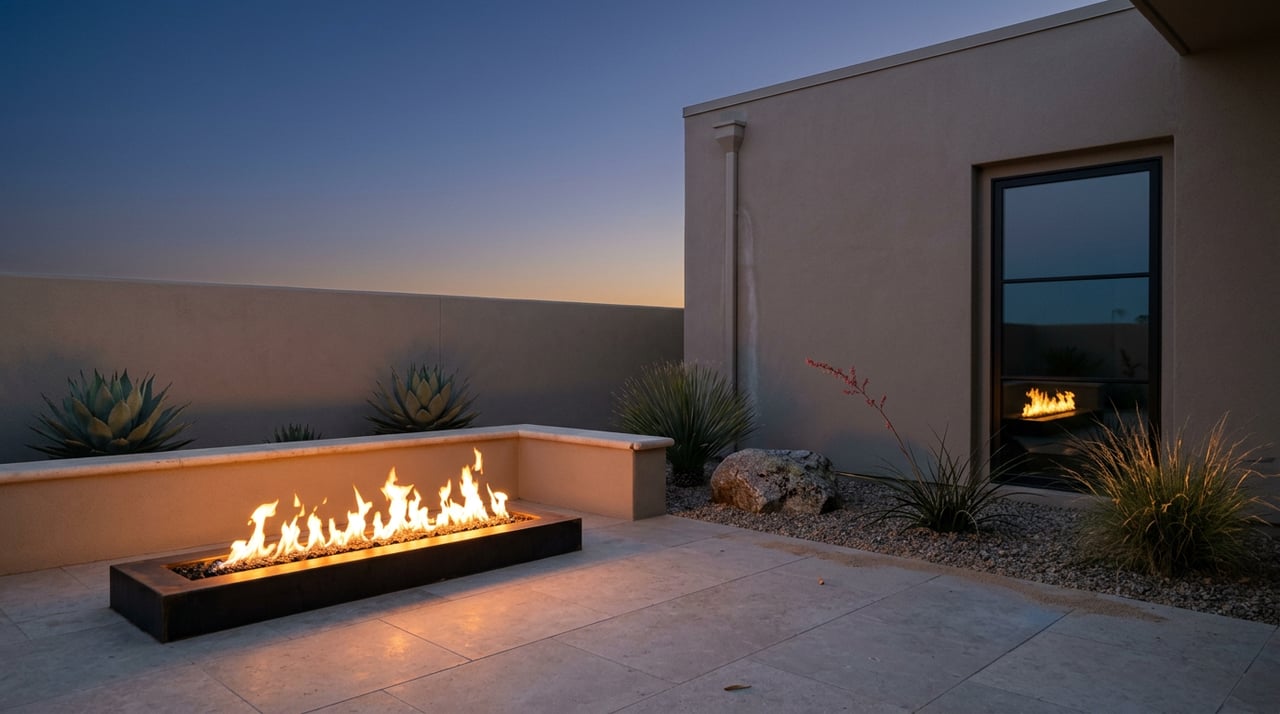
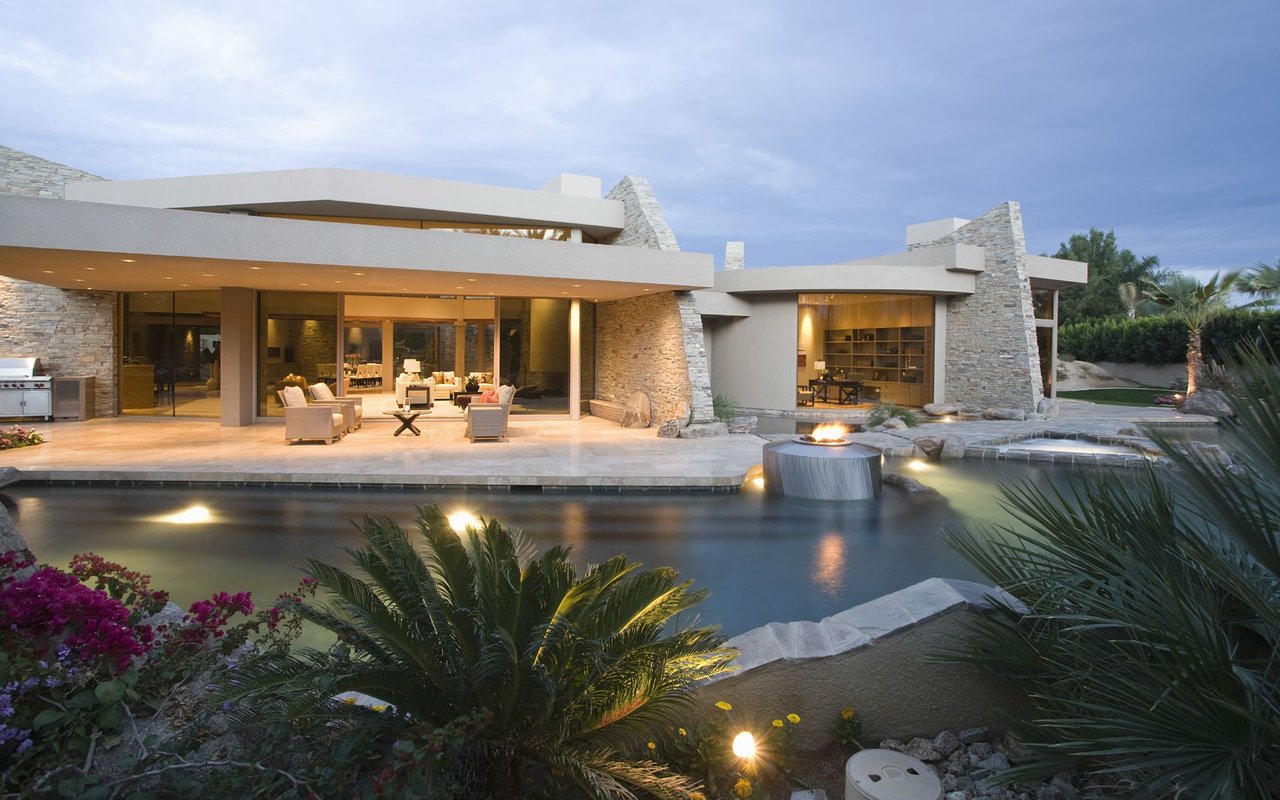
The clubhouse itself is set up for this. The 25,000-square-foot complex features men's and women's locker rooms, golf shop, dining room, indoor bar, outdoor bar with a fire pit, and ample outdoor covered seating. That outdoor bar has become the de facto living room for a good chunk of the community from July through September.
For the nights when the club is not the plan, a shortlist of what actually holds up in monsoon season:
The through-line for all of these is the same. August is not the month to travel through Stone Canyon on the way to somewhere else. It is the month the neighborhood's edges are working hardest, and the residents who treat it that way tend to be the ones who defend the summers the loudest.
If you own inside the gates and are thinking about how this seasonality affects your property's story, whether for a listing this fall or a longer conversation about the market, Lorenia Ruiz and the AZ Power Team are always available for a complimentary consultation. Schedule a conversation or request a free home valuation whenever the timing is right.

Whether you're buying your first home or building long-term wealth through real estate, Lorenia simplifies the process and empowers you to achieve your goals with confidence. Let’s connect and explore tailored solutions that bring your property dreams to life.
8387 N ORACLE RD STE 100 TUCSON AZ 85704