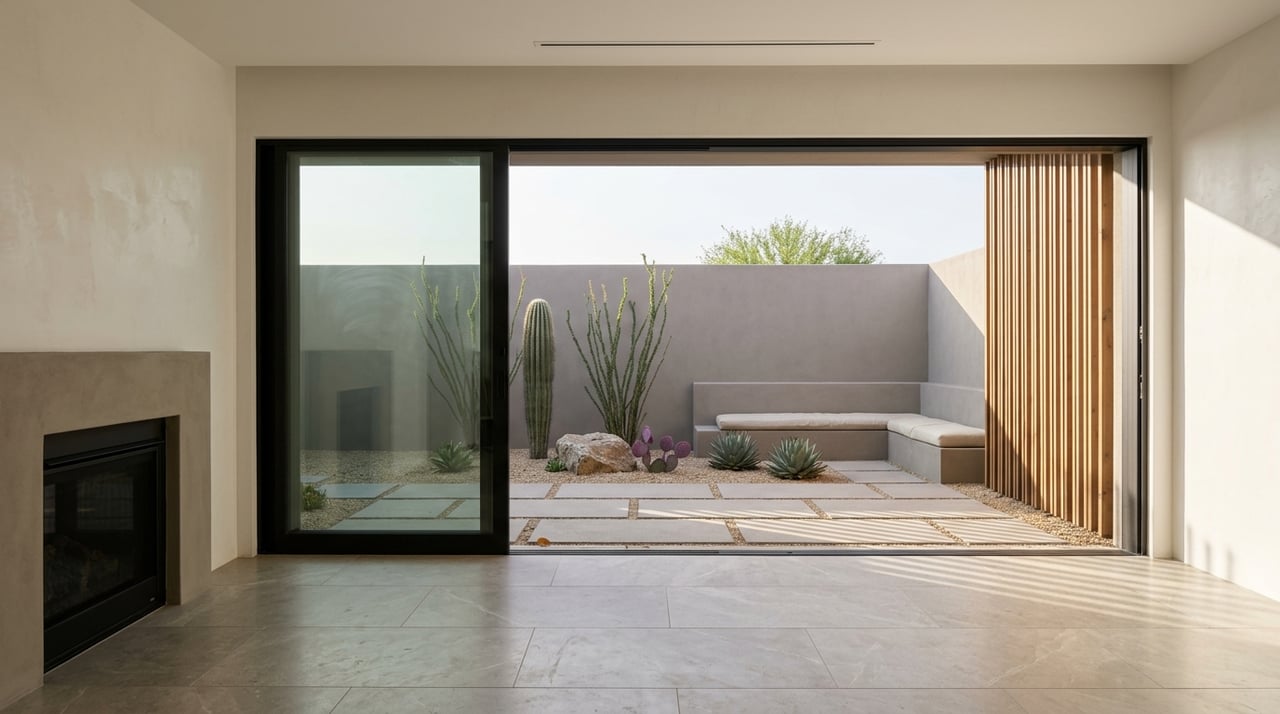
Desert-Modern Design Ideas In Catalina Foothills
June 11, 2026
June 11, 2026
If you want a home in Catalina Foothills to feel current without looking out of place, desert-modern design is one of the smartest directions you can take. In this part of Pima County, buyers notice finish quality, outdoor comfort, and how well a property fits the Sonoran Desert setting. This guide will show you how to create a polished, climate-aware look that works for everyday living and supports resale appeal. Let’s dive in.
Catalina Foothills homes sit in a market where presentation matters. Pima County’s 2025 valuation statistics list the Catalina Foothills economic district at a median value of $600,947 for single-family homes, which helps explain why thoughtful updates and finished outdoor spaces can stand out.
Just as important, this style fits the local climate. Tucson averages 10.61 inches of annual rainfall, an annual average temperature of 70.6°F, and 68 days each year at 100°F or hotter. With monsoon rainfall averaging 5.69 inches, homes here benefit from shade, thermal mass, durable materials, and landscaping that can handle heat and seasonal storms.
Design guidance tied to the Sonoran Desert also supports this approach. University of Arizona planning language emphasizes shade, enclosed outdoor space, contained greenery, and exterior areas that stay comfortable through much of the year. That is exactly why desert-modern feels so natural in Catalina Foothills.
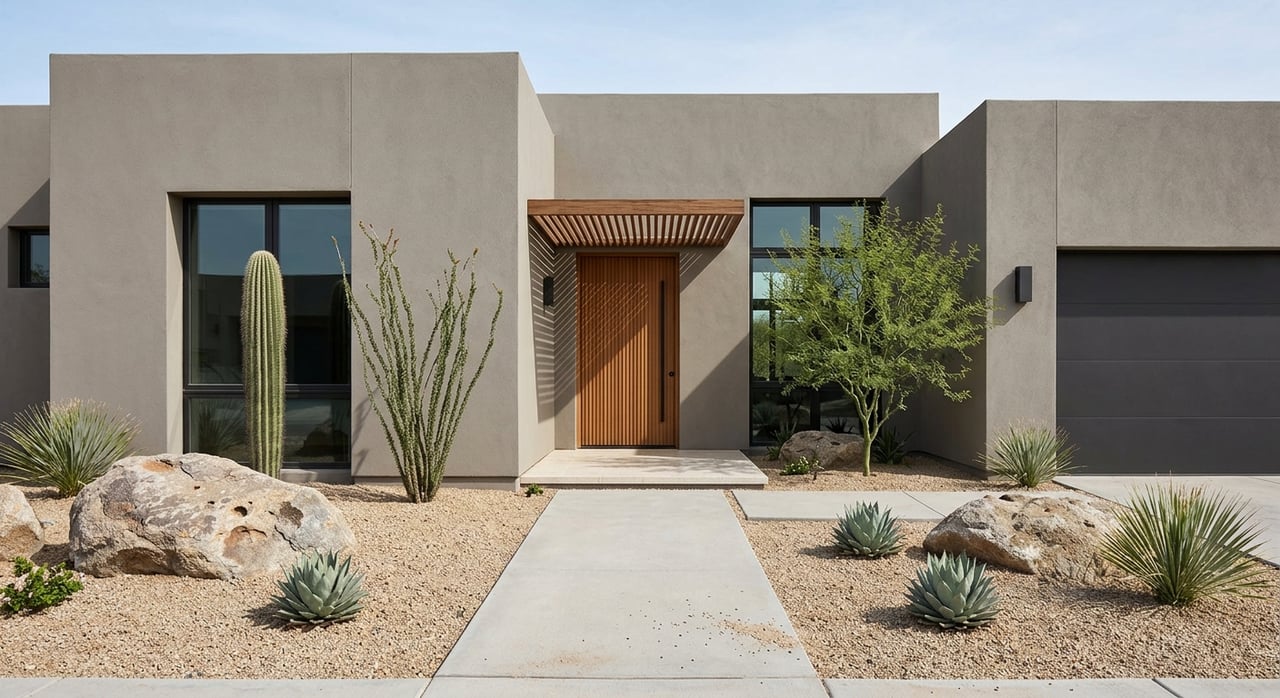
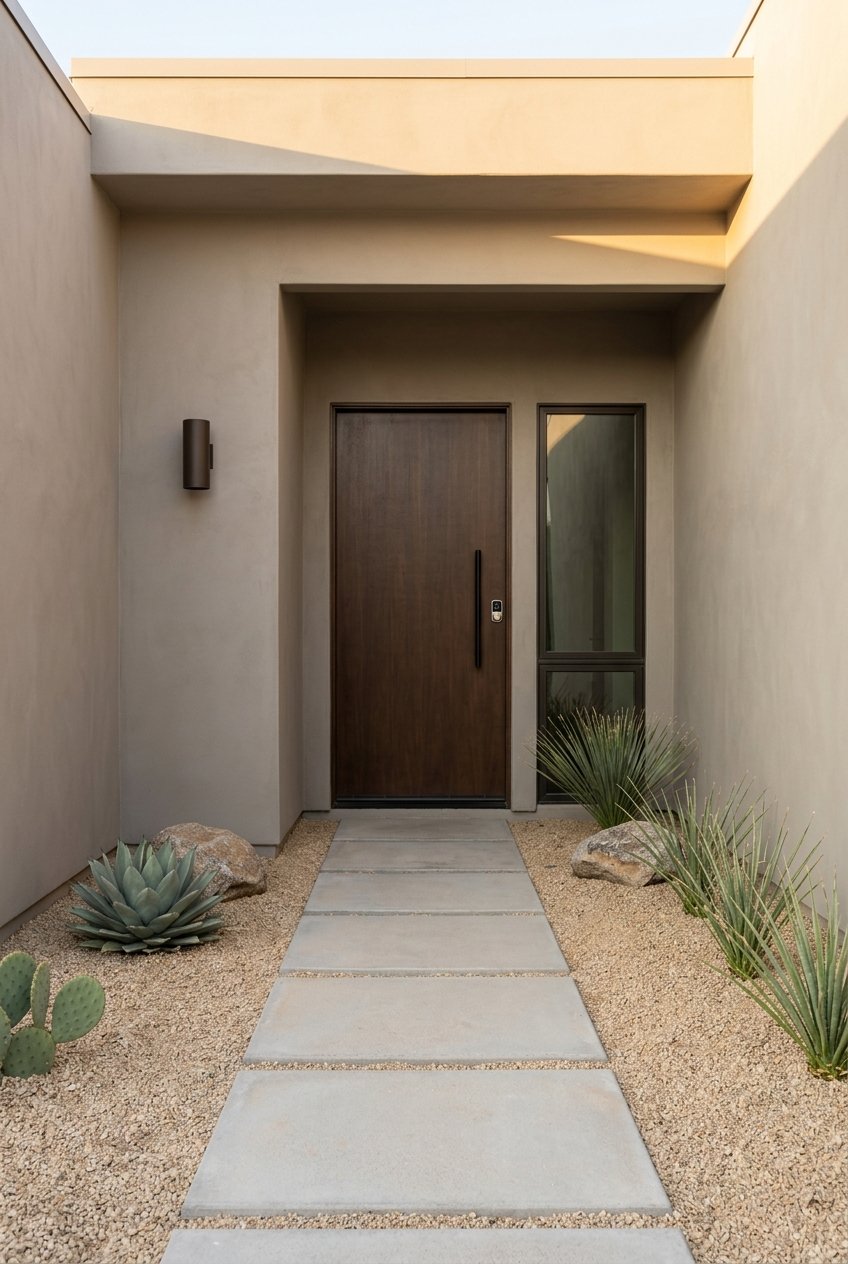
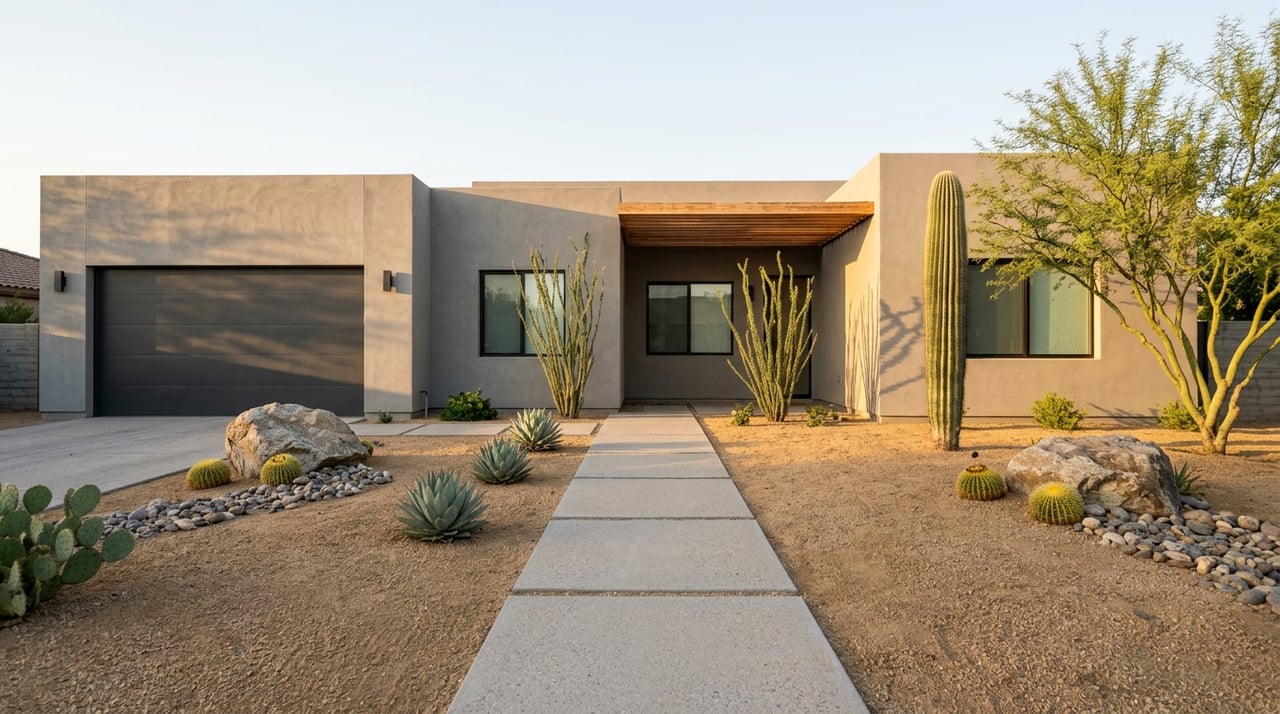
The strongest desert-modern homes usually begin with a restrained material palette. Think stone, stucco, masonry, wood accents, and muted earth tones that feel connected to the surrounding desert rather than competing with it.
That approach aligns with Pima County policy language for visually sensitive areas, which favors materials and colors that blend with desert surroundings and keep development visually harmonious with the natural setting. In practical terms, you do not need loud finishes or heavy ornament to make a home feel elevated.
A smart exterior mix might include:
For sellers, this is also a useful reminder that curb appeal often comes from editing, not adding more. A cleaner elevation with better material contrast can read as more expensive than a busy exterior with too many competing features.
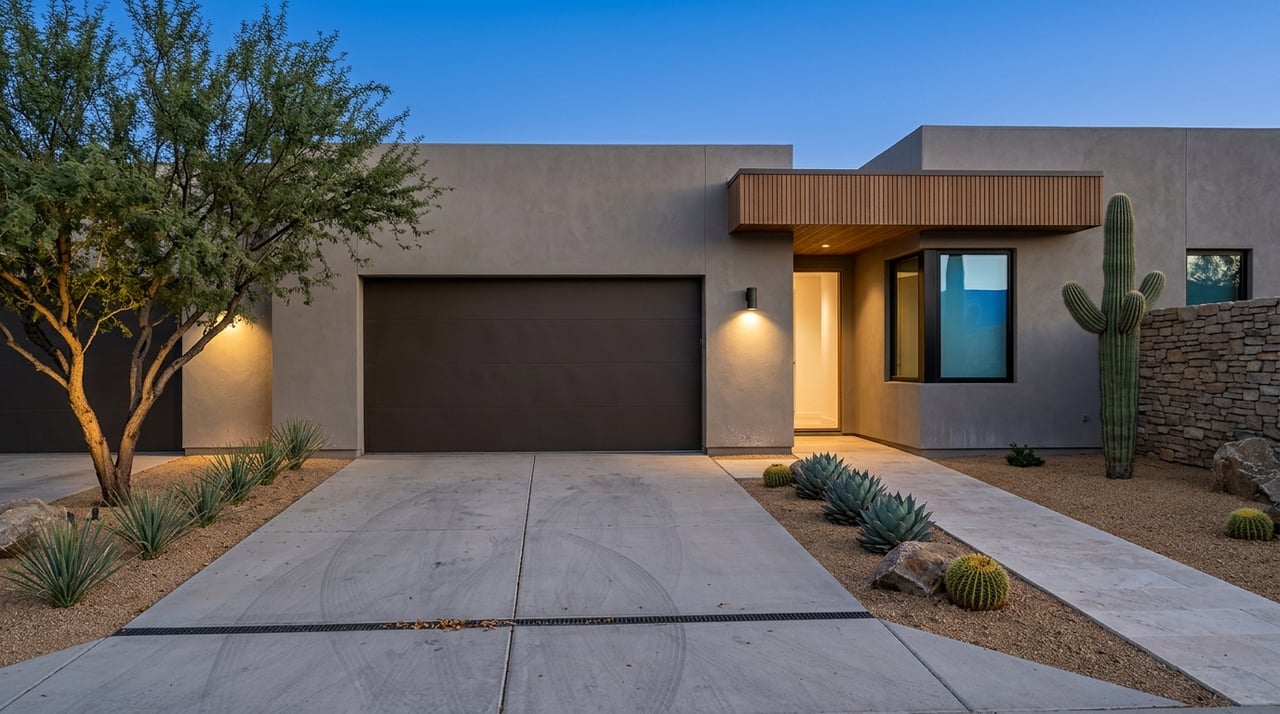
If you are wondering which updates make the biggest impact from the street, focus on visible exterior improvements first. In the 2025 Cost vs. Value report for the Mountain region, garage door replacement recouped 236.1 percent, steel entry door replacement recouped 186.3 percent, and manufactured stone veneer recouped 161.8 percent.
Those numbers do not mean every home needs the same project list. They do suggest that buyers respond strongly to updates they see right away, especially when those updates make the home feel fresh, durable, and well maintained.
In Catalina Foothills, the best first-impression upgrades often include:
By contrast, oversized additions can be much harder to justify before listing. The same report showed a primary suite addition recouping only 15.6 percent, which is a helpful warning against overbuilding for resale.
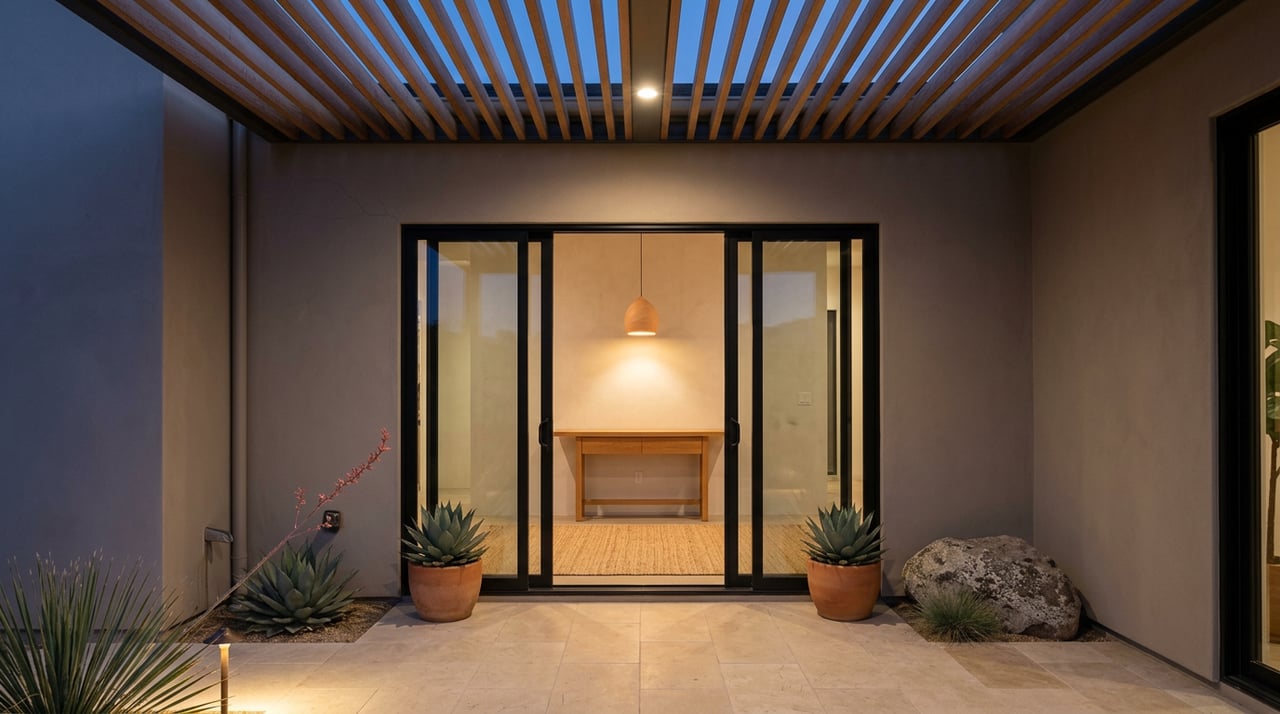
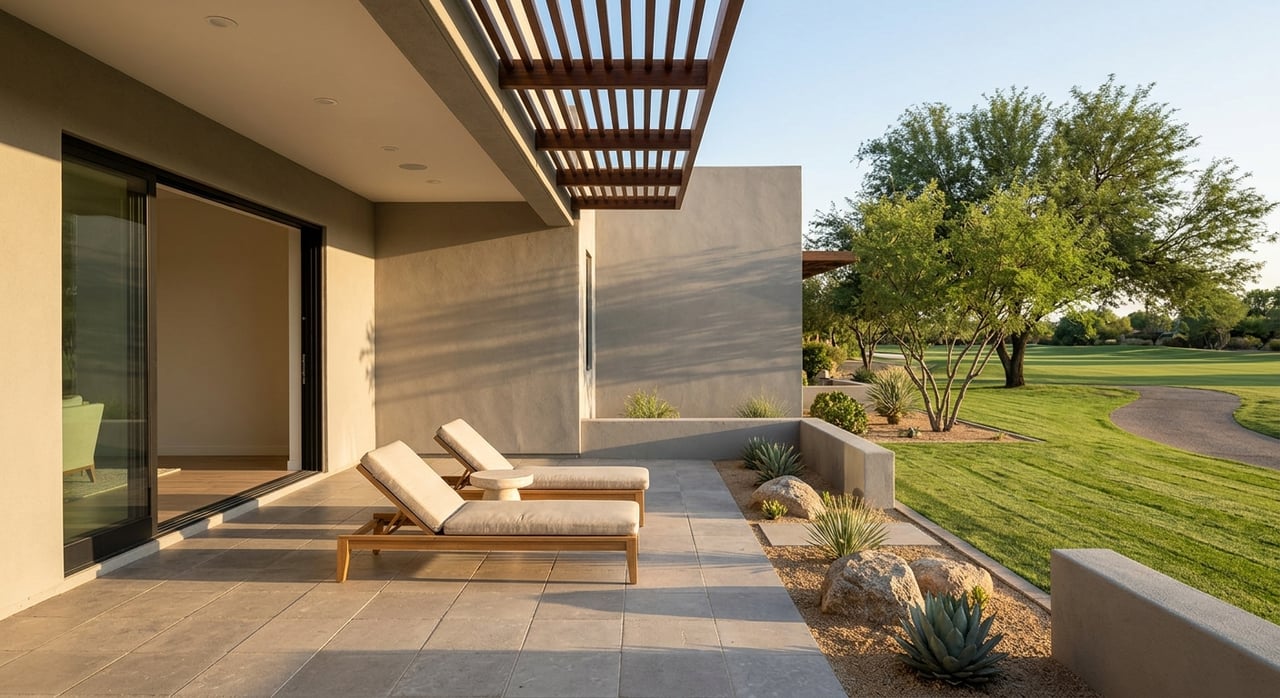
One of the defining moves in desert-modern design is shaping outdoor space so it is usable, not just decorative. A Tucson case study from the University of Arizona highlights shaded courtyards, a south-facing terrace, and limited west-facing openings as effective ways to support indoor-outdoor living while controlling heat gain.
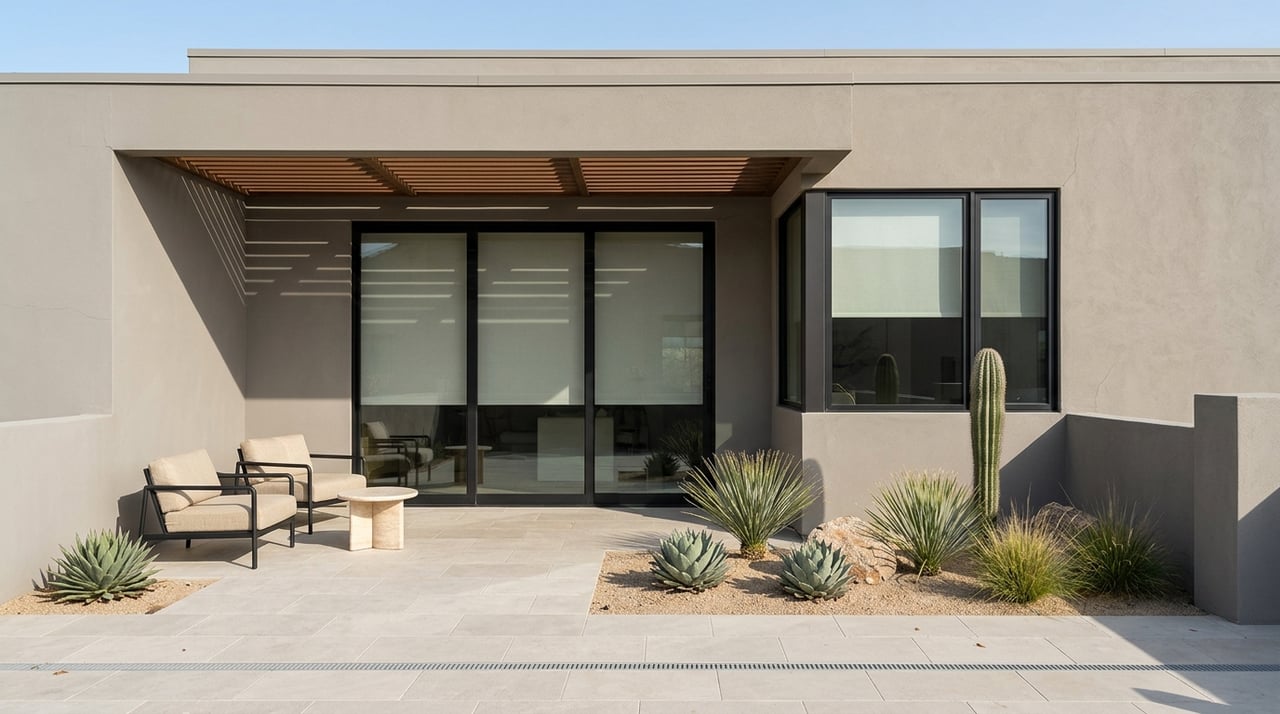
That lesson translates beautifully in Catalina Foothills. Instead of treating the yard as one large exposed area, break it into smaller outdoor rooms with a clear purpose. A front courtyard, side terrace, or covered patio can feel more private, more comfortable, and more refined.
Here are a few layout ideas that work well:
This is how you get that resort-like feeling without making the property high-maintenance. The goal is comfort, not excess.
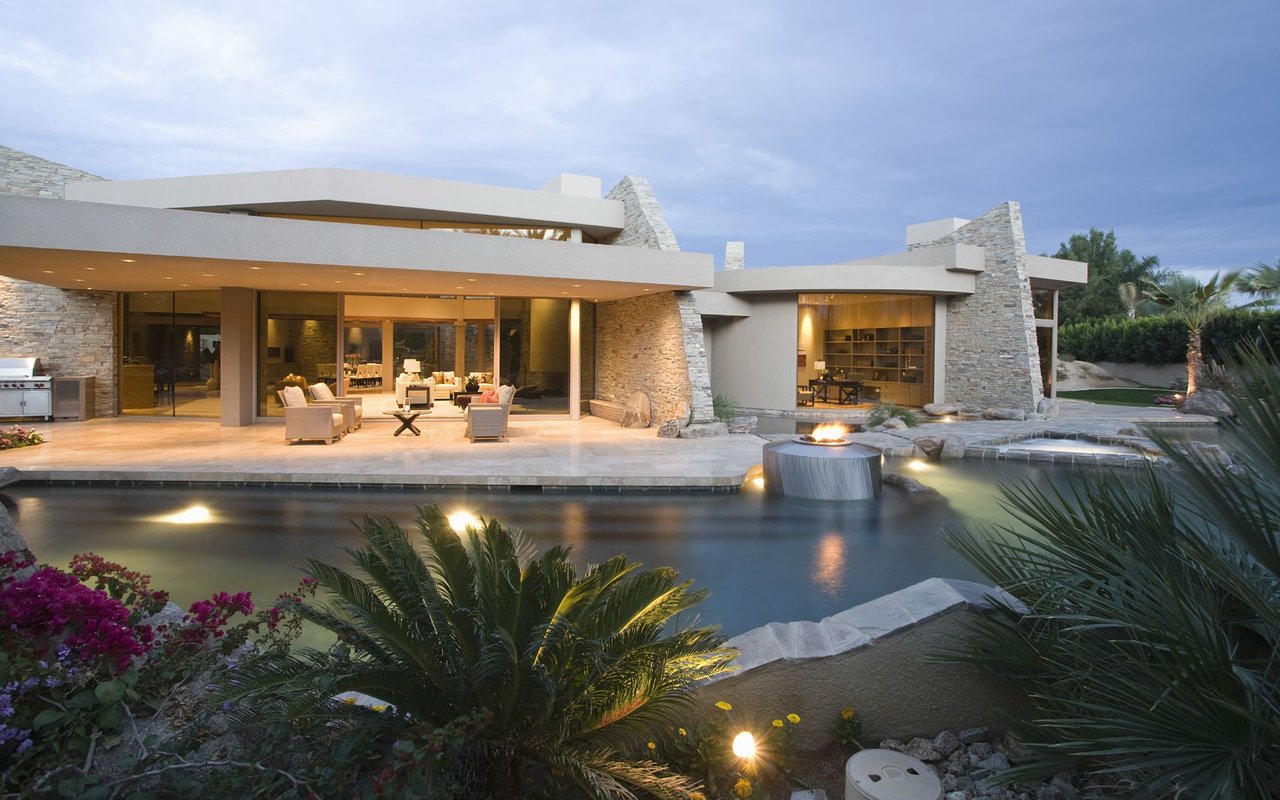
In Catalina Foothills, the landscape is one of the home’s best design features. Desert-modern design works especially well when it frames mountain and desert views instead of trying to outshine them.
The Tucson case study noted framed vistas and a rooftop focal point that made the view part of the interior experience. In practice, that can mean orienting patios toward the strongest sightlines, using low walls instead of tall visual barriers, and choosing pergolas or overhangs that guide the eye outward.
A few simple strategies can make a big difference:
When the design is quiet and intentional, the desert becomes part of the experience. That tends to appeal to both move-up buyers and relocation buyers who want a home that feels rooted in place.
A beautiful Catalina Foothills yard does not need broad turf to feel luxurious. In fact, Arizona water agencies note that as much as 70 percent of residential water use is outdoors, and the Arizona Department of Water Resources recommends regionally appropriate planting, irrigation, and low-water-use designs.
The City of Tucson describes water harvesting as capturing storm runoff for landscape plants, which can reduce potable water used for irrigation and reduce stormwater flowing onto streets and neighboring properties. The city also notes that xeriscape requirements are the main landscaping water-use reduction method enforced in the land use code.
For most homeowners, the best desert-modern landscape plan includes:
This approach helps the yard feel cool, usable, and well considered. It also supports easier maintenance and a more climate-appropriate overall look.
If you want your patio to feel special without wasting water, focus on shade, texture, and layout. Desert-modern outdoor living is less about lush, oversized planting and more about creating comfort in the right places.
University of Arizona planning guidance emphasizes contained greenery and comfortable outdoor areas. That means a patio can feel inviting with one shaded seating zone, a simple dining area, and a limited planting palette concentrated where you spend time most.
To create that effect, consider:
This kind of patio photographs well, shows well, and usually appeals to a broad range of buyers. It feels finished, but not so customized that future owners cannot picture themselves there.
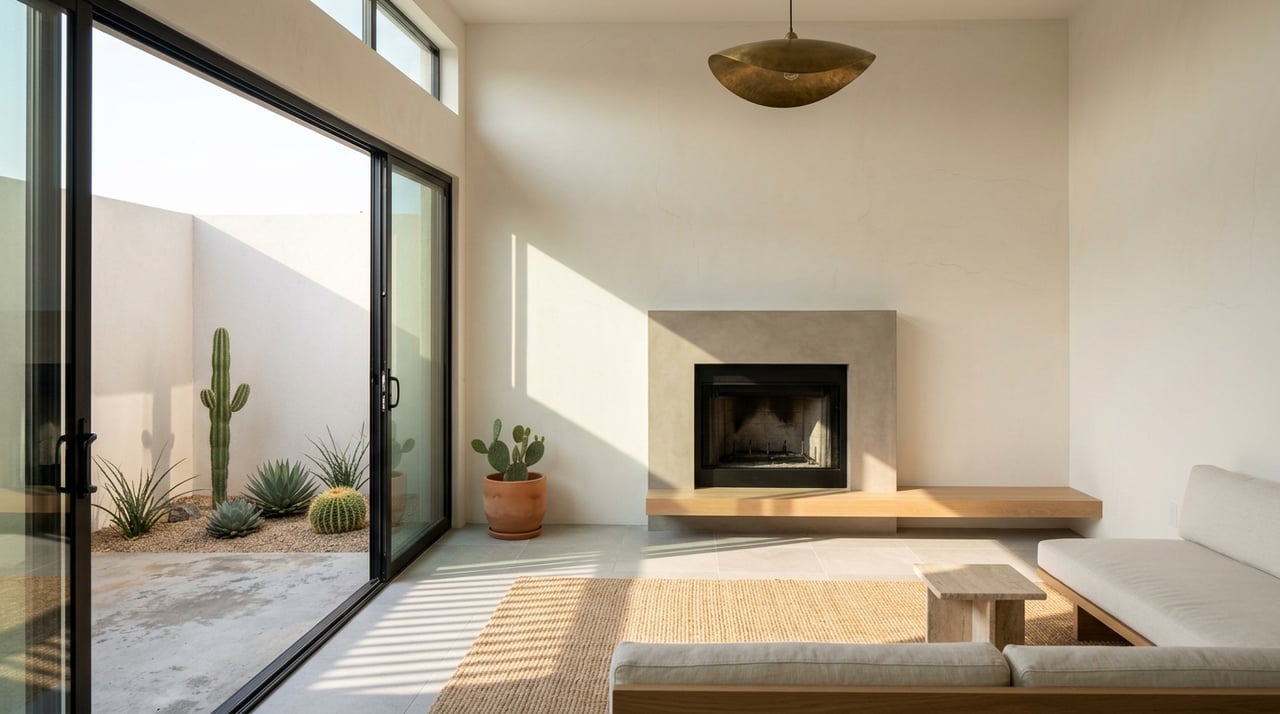
For resale, desert-modern is strongest when it feels polished and flexible. The architecture should read as calm, while the landscape and natural light provide much of the texture and character.
That is especially important if you want the home to attract both local move-up buyers and people relocating from other markets. Broad appeal usually comes from durable materials, simple lines, and a clear connection to the local environment.
The most useful guiding principles are:
For some sellers, this is where thoughtful home-prep guidance can make a real difference. The right design decisions can improve presentation without pushing into costly changes that do not support value.
It is easy to assume that bigger always means better, especially in a high-value market. But the resale data suggests a more strategic path.
Exterior improvements and selective envelope upgrades often do more for perceived value than a large addition. Projects such as garage door replacement, entry door replacement, stone veneer, and even fiber-cement siding replacement performed far better in the Mountain region report than major interior expansion.
If you are preparing to sell, ask yourself:
If the answer is yes, it may be worth prioritizing. If not, a simpler update may deliver a better result.
A well-executed desert-modern home in Catalina Foothills should feel grounded, quiet, and easy to enjoy. The best designs use climate-smart materials, shaded outdoor living, and water-wise landscaping to create a look that is both refined and practical. If you are planning updates before buying, selling, or listing your home, Lorenia Ruiz can help you make decisions that fit the market and present your property at its best.
Whether you're buying your first home or building long-term wealth through real estate, Lorenia simplifies the process and empowers you to achieve your goals with confidence. Let’s connect and explore tailored solutions that bring your property dreams to life.
8387 N ORACLE RD STE 100 TUCSON AZ 85704