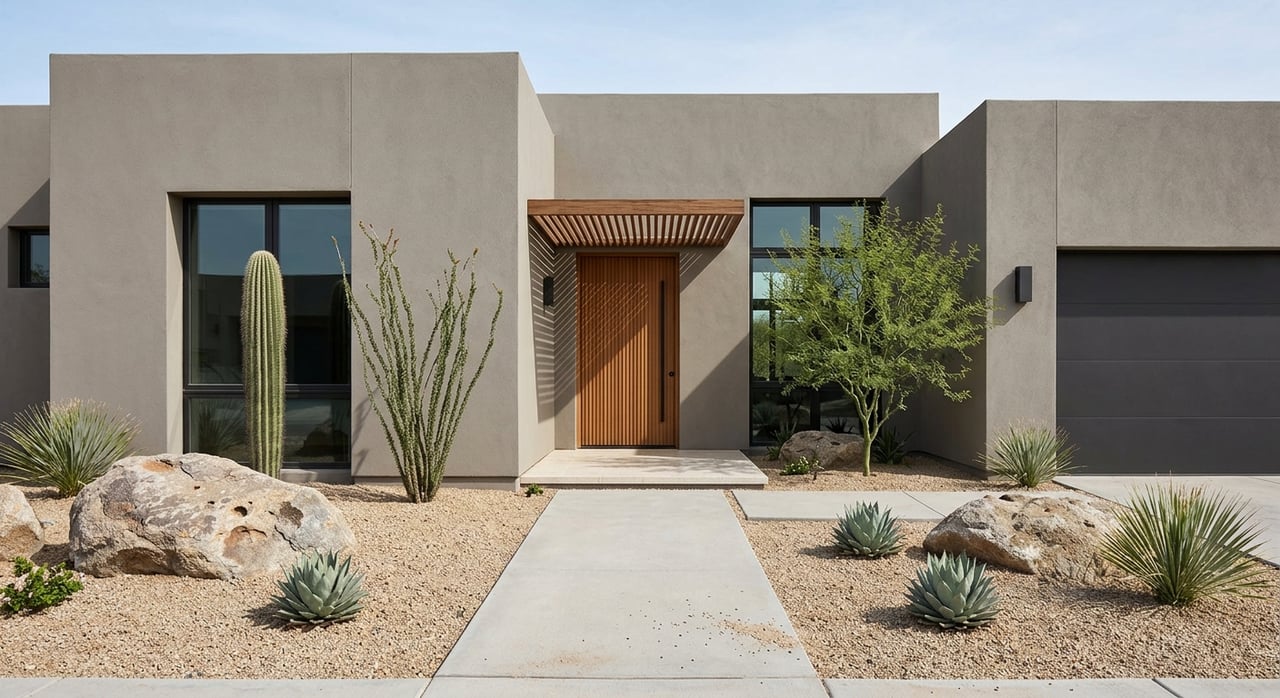
Pima Canyon Real Estate Trends Luxury Buyers Should Watch
July 16, 2026
July 16, 2026
Is now the right time to buy in Pima Canyon, or is it smarter to wait for more leverage? If you are watching Tucson’s luxury market, that question is especially important in a small, high-end area where each listing can tell a different story. This guide breaks down the latest Pima Canyon real estate trends so you can better understand pricing, timing, inventory, and negotiation opportunities before you make your next move. Let’s dive in.
Pima Canyon is often tracked in public data as Pima Canyon Estates within the larger Tucson and Catalina Foothills market, not always as a separate market with deep standalone statistics. That matters because the neighborhood has a very small number of active listings, which can make trends look sharper or slower than they might in a larger area.
For luxury buyers, the key is to read Pima Canyon in layers. You want to look at the neighborhood itself, then compare it with the broader Catalina Foothills market, Tucson citywide numbers, and the wider $1M+ luxury segment. That gives you a more realistic picture of where the opportunities may be.
Recent public data shows 6 homes for sale in Pima Canyon Estates, with a median listing price of $2.795 million and a median price of $519 per square foot. Those numbers place Pima Canyon well above the broader Catalina Foothills and Tucson markets, which is consistent with its position in Tucson’s upper-end housing landscape.
For comparison, the broader Catalina Foothills market posted a median listing price of $650,000 and a median sold price of $700,000 in June 2026. Tucson overall showed a median listing price of $375,000 in the same period. That gap helps explain why luxury buyers in Pima Canyon should avoid relying on broad Tucson headlines alone.
One of the most important trends luxury buyers should watch is time on market. In Pima Canyon Estates, the median days on market is 94 days, which is notably slower than both Catalina Foothills and the wider county benchmark.
Catalina Foothills posted 58 days on market in June 2026, while Pima County also sat at 58 days in May 2026. Tucson overall came in at 57 days on market. In plain terms, homes in Pima Canyon are generally taking longer to move than the surrounding market.
That slower pace can create opportunity, but not across the board. A listing that has lingered may offer room for stronger negotiation, while a rare property with strong presentation and pricing may still move with less flexibility.
With only six active listings, Pima Canyon is a very thin market. In a neighborhood like this, buyers are not choosing from dozens of similar homes. Instead, each property may stand apart based on lot placement, privacy, views, outdoor living, or updates.
That limited inventory means the market can feel balanced on paper while still being selective in practice. If one or two standout homes hit the market, buyer activity can shift quickly. If inventory stays tight, buyers may need to move decisively when a property checks the right boxes.
Another signal worth watching is how close homes are selling to asking price. Pima Canyon data indicates that homes have sold for approximately asking on average, while Catalina Foothills has been around a 98% sale-to-list ratio and Tucson overall has been near 99% of asking.
That tells you something important about today’s luxury environment. Negotiation power is not just about whether the market is broadly hot or cool. It is often tied to whether a home is priced correctly from the start, how well it shows, and how unique the property is compared with the limited competition nearby.
A major trend luxury buyers should watch is that Tucson’s upper-end market is not behaving like one single category. In the June 2026 luxury breakdown, different price bands showed different levels of buyer and seller leverage.
The $1 million to $1.249 million range leaned toward sellers. The $1.25 million to $1.499 million range was balanced. The $1.75 million to $1.999 million range was slightly buyer-leaning, and the $2 million and up tier was also slightly buyer-leaning.
This matters in Pima Canyon because the neighborhood’s median list price sits well into the upper luxury range. If you are shopping above $1.75 million, you may have more negotiating room than a buyer competing in lower luxury bands where supply is tighter.
The wider Tucson luxury market also adds context for Pima Canyon buyers. In May 2026, the $1 million+ segment had 226 active listings, 59 closings, 60 new properties under contract, and 3.8 months of inventory, with a median sold price of $1.629 million.
The same reporting also noted that year-to-date closings were down 5% year over year. That does not point to a dramatic shift, but it does support the idea of a more measured luxury market where buyers can benefit from patience, especially at the higher end.
If you are buying in Pima Canyon, the best strategy is usually not to assume every seller has the same level of leverage. A home that has been on the market for close to or beyond the 94-day neighborhood pace may deserve a closer look, especially if pricing feels stretched relative to condition or updates.
On the other hand, a home with strong presentation, recent improvements, and a compelling setting may still command close to list. In a small luxury market, buyers often need to separate stale inventory from scarce, high-demand inventory rather than treating all listings the same.
Because Pima Canyon has such a limited pool of comparable listings, pricing and value can depend heavily on details. Features like view corridors, lot size, remodel quality, privacy, and outdoor living spaces may carry more weight here than they would in a larger neighborhood with more direct comps.
For buyers, that means your analysis should go beyond square footage and headline price. Two homes with similar size and list price may offer very different long-term value depending on setting, finish level, and how well the home fits what today’s luxury buyer is actually seeking.
Over the next 6 to 12 months, the most likely pattern looks like a steady and more balanced backdrop, not a dramatic reset. Broader housing forecasts suggest buyer bargaining power may improve modestly as affordability and inventory inch higher.
Local numbers support a similar view. Pima Canyon’s longer days on market, balanced conditions in the Foothills, and buyer-leaning behavior in the highest luxury price bands all suggest that patient, informed buyers may find opportunities without expecting deep discounts across the board.
If you are planning a purchase in Pima Canyon, these are the trends and actions to keep top of mind:
In many luxury neighborhoods, the headline numbers only tell part of the story. In Pima Canyon, that is especially true because the market is thin, selective, and highly sensitive to pricing and presentation.
For you as a buyer, that can be good news. A careful, data-driven approach can help you identify where there is room to negotiate, where value is stronger than it appears, and where acting quickly may make more sense than waiting.
If you are considering a move in Pima Canyon or anywhere in Tucson’s luxury market, working with a local advisor who understands pricing nuance, presentation quality, and neighborhood-specific demand can make a real difference. To explore your options with a trusted local expert, connect with Lorenia Ruiz.
Whether you're buying your first home or building long-term wealth through real estate, Lorenia simplifies the process and empowers you to achieve your goals with confidence. Let’s connect and explore tailored solutions that bring your property dreams to life.
8387 N ORACLE RD STE 100 TUCSON AZ 85704